Most People Think Their Dog’s Back Legs Are Going Because They’re “Just Old.” Here’s Why The Back Half Often Shows It First.
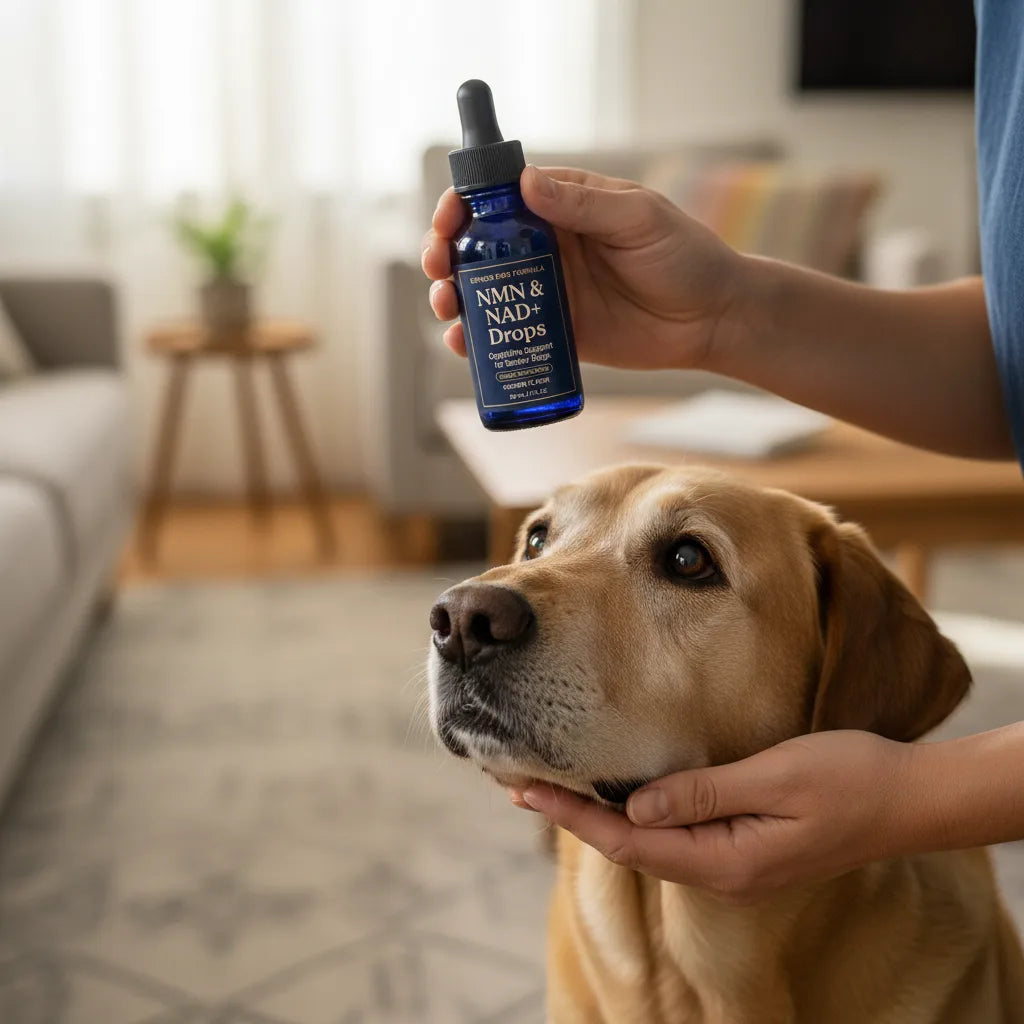
They are not being stubborn about the stairs.
You know the moment. They reach the bottom, look up, and pause. Last year they were already halfway there. Now they study the first step like it has changed overnight.
Then the kitchen floor. Front paws planted. Back paws searching for grip. The slow-motion sit that happens in stages instead of one easy movement.
And the part you may not say out loud: you have started helping them up.
A hand beneath the back end. A lift into the car. A small boost onto the bed. It became part of the routine so gradually that you cannot remember the first day you did it.
The front still looks strong. Chest up. Shoulders steady. The back half is where the change keeps showing.
That pattern has reasons. But first, it needs a safety line: a sudden change, obvious pain, dragging, knuckling, loss of bladder control, or one side becoming weaker than the other deserves a veterinarian promptly. A supplement is not the first move there.
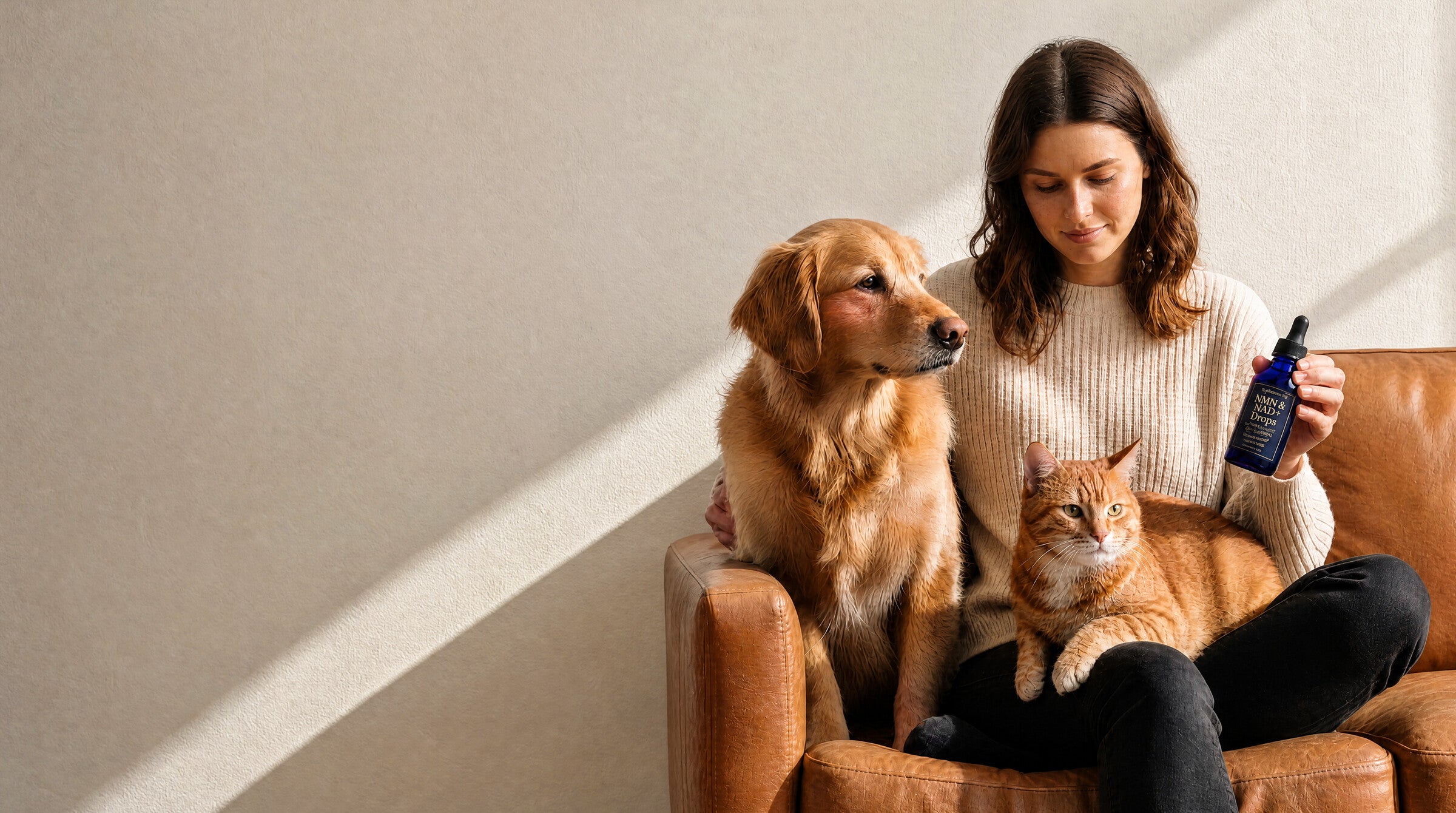
7 Signs It’s The Back Legs — Not A Personality Change
- They pause at the bottom of stairs they used to climb automatically.
- The back paws slide or splay on hardwood and tile.
- Sitting happens in careful stages instead of one motion.
- You put a hand under the back end to help them rise.
- Front paws reach the couch, then they wait for help.
- The shoulders and chest still look solid while the rear looks narrower.
- A joint chew changed nothing, even though you gave it a fair try.
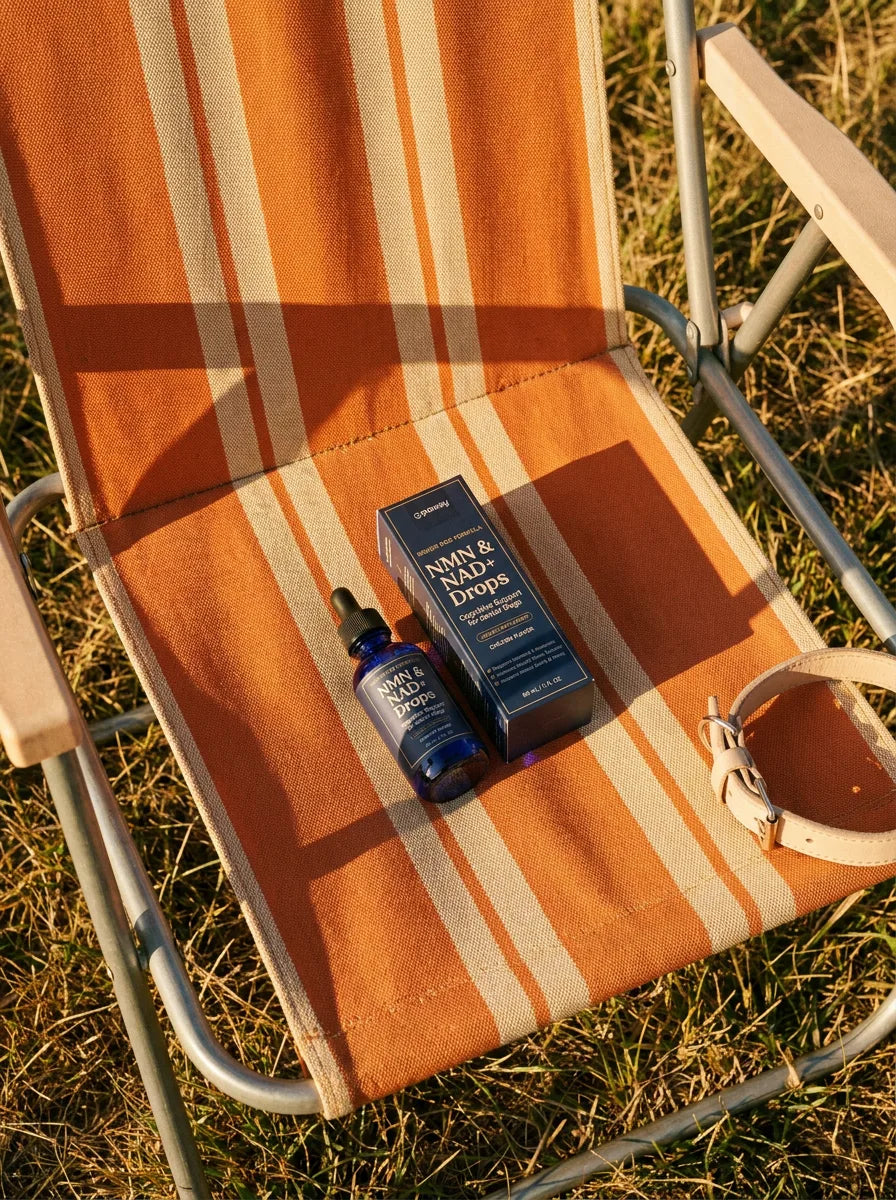
If that last line landed, read the next part carefully.
The rear of the body does the pushing. Rising, climbing, jumping, accelerating — the big muscles around the hips and thighs have a heavy job. Age-related muscle loss can make that job harder, while arthritis, pain, nerve problems, injury, and other medical conditions can create a similar picture.
That is why “back legs” is a sign, not a diagnosis.
A joint does not move itself. Muscle moves it. Nerves coordinate it. Energy powers the work. A product focused only on joint cushioning may be perfectly respectable and still miss part of the system you are watching.
Big muscles. Heavy job. Long wiring. The back half has several reasons to show change early.
Comfort and structure
Cartilage, connective tissue, normal inflammatory balance, and veterinary pain management all live in this part of the conversation.
Energy for the push
Mitochondria turn nutrients into usable energy. NAD+ participates in that cellular energy system and normal maintenance.
Why The Joint Chew May Not Have Changed What You Were Watching
Most owners have already spent money here. A bag of chews. A powder. Maybe two brands, bought months apart, both with real hope.
Then nothing obvious changed. So you blamed the product. Or worse, you blamed yourself for choosing the wrong one.
There is a simpler explanation: the joint was not the whole picture.
Movement is a chain. Joint comfort matters. So do muscle, nerves, body weight, paws, vision, confidence, and the cellular machinery that makes energy available. Supporting one link cannot guarantee what happens to the whole chain.
That is also why a proper veterinary exam matters. It separates the gradual changes of ageing from the conditions that only look gradual from across the room.
Why Pawsy Started One Level Below The Joint
Muscle cells are packed with mitochondria — tiny structures that help turn food into usable energy. NAD+ participates in that process and in normal cellular maintenance.
NAD+ biology is an active area of ageing research. But the honest version matters: most detailed work is in people and laboratory models, and a pathway is not the same thing as a guaranteed product result in a dog.
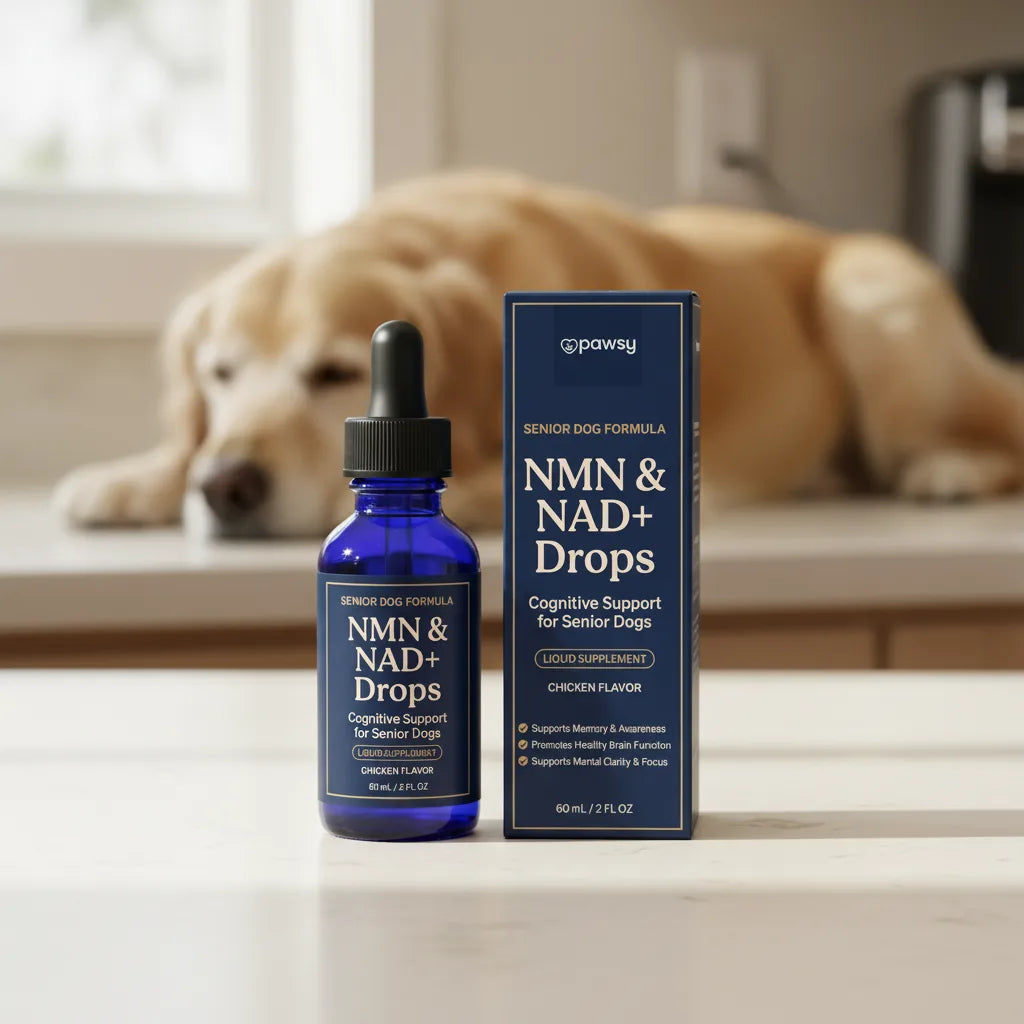
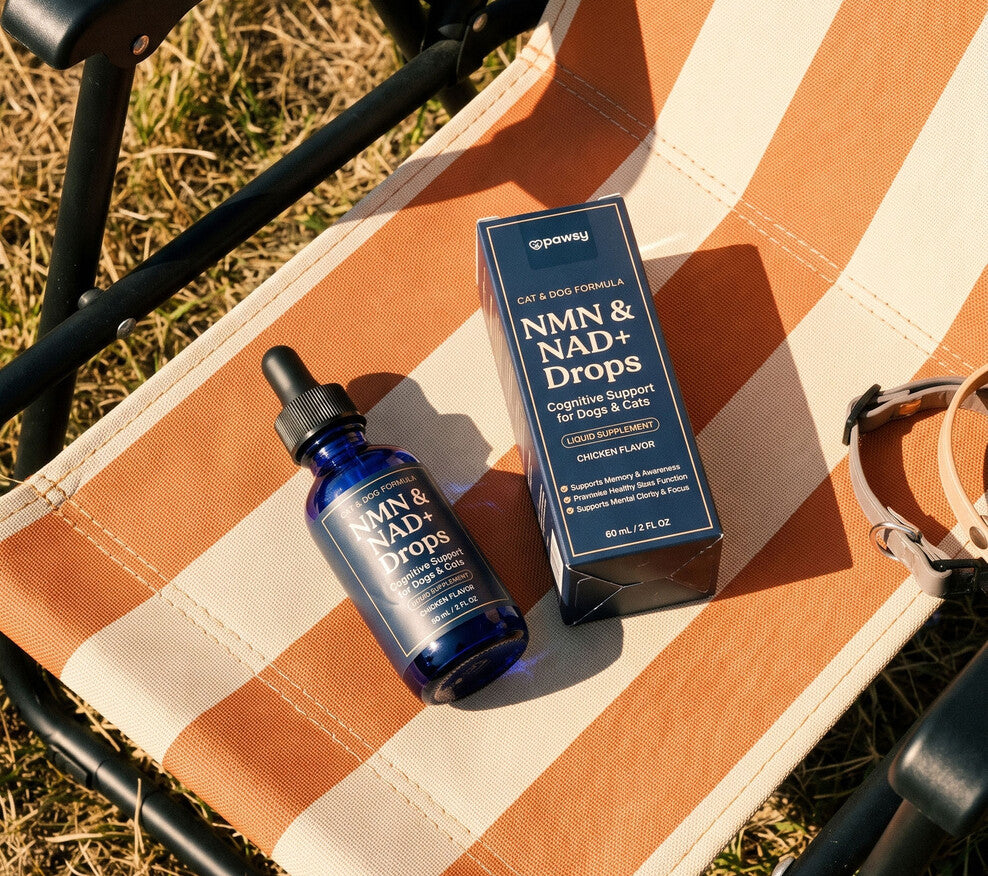
Pawsy built Second Wind as daily nutritional support around that cellular-energy conversation. Then it printed the amount of every active on the label so you can judge the formula instead of trusting a proprietary blend.
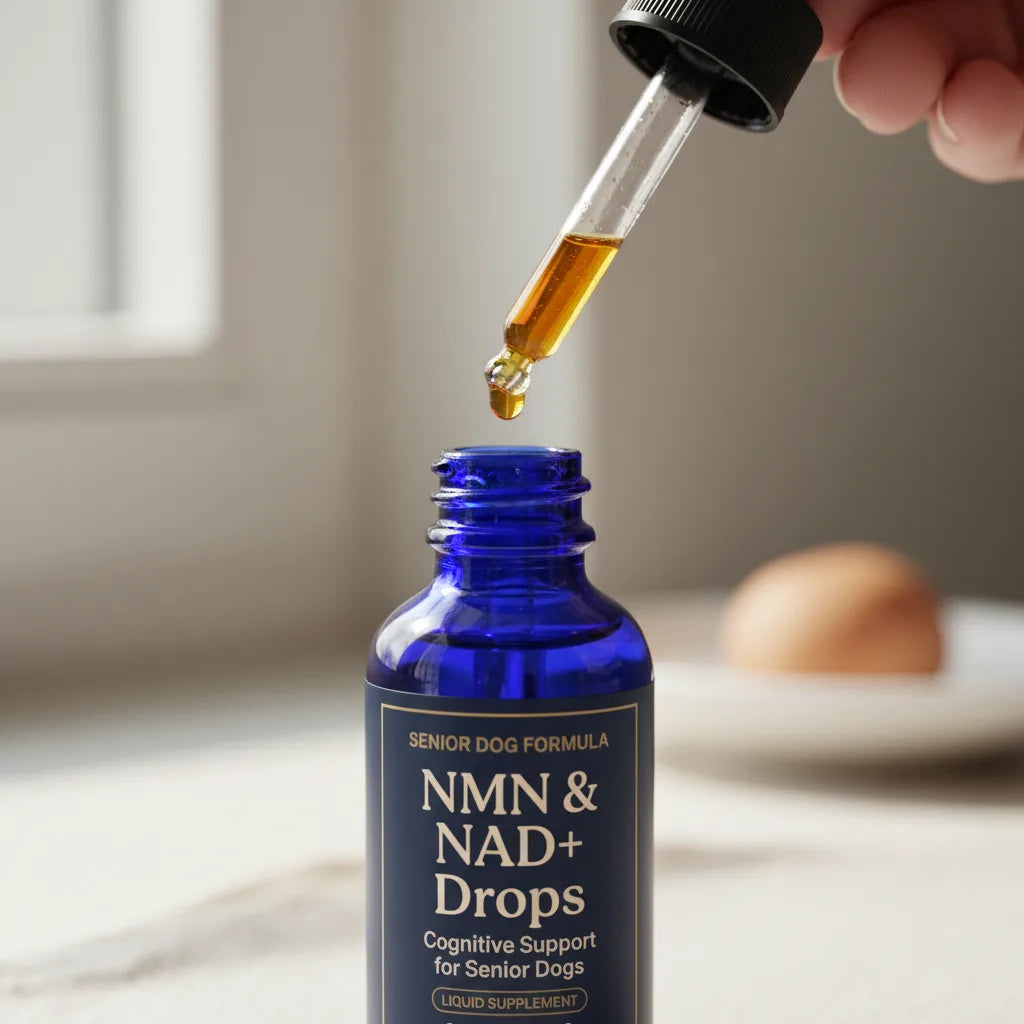
It is a chicken-flavoured liquid measured onto food with the included dropper. No pill pocket. No cheese. No chew they have to negotiate with.

It Wasn’t Only The Ingredient. The Dose And The Routine Matter Too.
A fashionable ingredient can be printed on the front while its amount disappears into a blend on the back.
Second Wind takes the opposite approach. One 1 mL serving lists eight active amounts in plain sight:
- NMN · 100 mgA precursor used by the body in the NAD+ pathway.
- Nicotinamide Riboside · 50 mgAnother NAD+ precursor included for cellular energy support.
- Algal Omega-3 DHA · 120 mgDHA supports normal brain structure and function.
- Phosphatidylserine · 25 mgA phospholipid found in cell membranes, including brain cells.
- Citicoline · 50 mgA choline source involved in normal membrane and neurotransmitter pathways.
- Lion’s Mane Extract · 40 mgPart of the cognitive-support blend.
- Vitamin E · 10 mgAntioxidant support.
- MCT Oil · 200 mgA carrier in the liquid formula.
- Supports normal cellular energy metabolism
- Supports normal cognitive function
- Liquid measured by body weight
- Works with kibble, raw, fresh, or home-cooked food

The First 90 Days — What To Track Instead Of Chasing A Miracle
Most people look straight at the stairs. That is understandable. It is also a terrible daily measuring tool.
Track the smaller movements that happen every day. They give you more data, with less wishful thinking. Individual results vary, and no timeline can promise an outcome.
1Days 1–14 — The Routine Comes First
Shake. Measure. Add it to the same meal each day.
Take a short video of the rise after a nap and the walk across the kitchen. Not for social media. For you. Memory edits the past; video does not.
2Weeks 3–6 — Watch The First Three Steps
Forget the longest walk. Watch the first three steps after sleep.
Does the back end organize itself quickly? Is there a second attempt? Do they stop and stretch before moving? Record what happens, including no change.
3Weeks 7–9 — The Floor Tells The Truth
Hard flooring exposes hesitation that carpet hides. Watch the turn around the water bowl, the approach to the door, and the moment they sit.
More slipping, new asymmetry, or obvious discomfort is a reason to speak with your veterinarian — not a reason to increase a supplement dose.
4Weeks 10–12 — Review The Pattern
Compare the same movements under the same conditions. Look at the whole routine: food, body weight, exercise, sleep, medication, veterinary advice, and consistency.
If Second Wind has not earned its place by day 90, use the money-back guarantee. A fair trial should end with a real decision.
Real Moments. Better Notes.
The rise
Count attempts after the longest nap of the day.
The turn
Watch how the back feet reposition around food and water.
The lift
Write down how often your hand goes under the back end.
Weak back legs are not always the beginning of the change. They may simply be the part you could finally see.
The answer is not panic, and it is not a bigger promise on a bag of chews. It is a clearer look at the whole movement system, a veterinarian when the signs call for one, and a daily routine you can judge honestly.

Second Wind — Daily Cellular Energy Support For Older Dogs And Cats
- NMN, Nicotinamide Riboside, DHA, Citicoline and four more named actives
- Every active amount printed on the label
- Chicken-flavoured liquid — measured onto food
- 60 mL amber glass bottle
- 90-day money-back guarantee
If the back-leg change came on suddenly, looks painful, or is clearly worse on one side, see your veterinarian first. Some conditions look like “ageing” from a distance and need medical attention.
For the daily support conversation, Second Wind gives you a formula you can actually read. One bottle. Eight active amounts. One measured routine.
References & Reading
[1] Covarrubias AJ, Perrone R, Grozio A, Verdin E. NAD+ metabolism and its roles in cellular processes during ageing. Nature Reviews Molecular Cell Biology. 2021.
[2] Rajman L, Chwalek K, Sinclair DA. Therapeutic potential of NAD-boosting molecules: the in vivo evidence. Cell Metabolism. 2018.
[3] Freeman LM. Cachexia and sarcopenia: emerging syndromes of importance in dogs and cats. Journal of Veterinary Internal Medicine. 2012.
These sources explain general biological mechanisms. They do not establish that this product treats weakness, arthritis, sarcopenia, or any disease.