The First Sign Of Ageing Usually Isn’t Their Birthday. It’s The Tiny Routine They Stop Doing.
It rarely begins with a dramatic moment.
It begins with the doorbell. Your dog hears it, lifts their head, then decides the hallway can wait. Or the walk gets shorter by one block. Or they stand beneath the couch, look up, and choose the floor.
Each change is small enough to explain away. A warm day. A long nap. A dog who is “just getting older.” Then one morning you realize the little changes have become the new routine.
Ageing is real. It is not a failure, and no supplement turns an older dog into a puppy. But “old age” is not a useful explanation by itself. It does not tell you what has changed inside the body, what deserves a veterinary exam, or what daily support might still matter.
The first step is simply knowing what you are looking at.
7 Quiet Changes Owners Notice Before They Say “My Dog Is Slowing Down”
- The doorbell no longer gets the same full-body response.
- They pause before the stairs, car, bed, or couch.
- Morning stretches take longer and the first few steps look careful.
- The walk ends because they turn for home, not because you do.
- A familiar toy gets watched instead of chased.
- They sleep through parts of the day that used to be busy.
- They seem present, but a little less quick to notice what changed in the room.
One sign on one day can mean almost anything. A pattern is different.
Write down what you see. If a change is sudden, severe, painful, one-sided, or comes with appetite, breathing, toileting, balance, or personality changes, call your veterinarian. Those are not moments for a supplement-first guess.
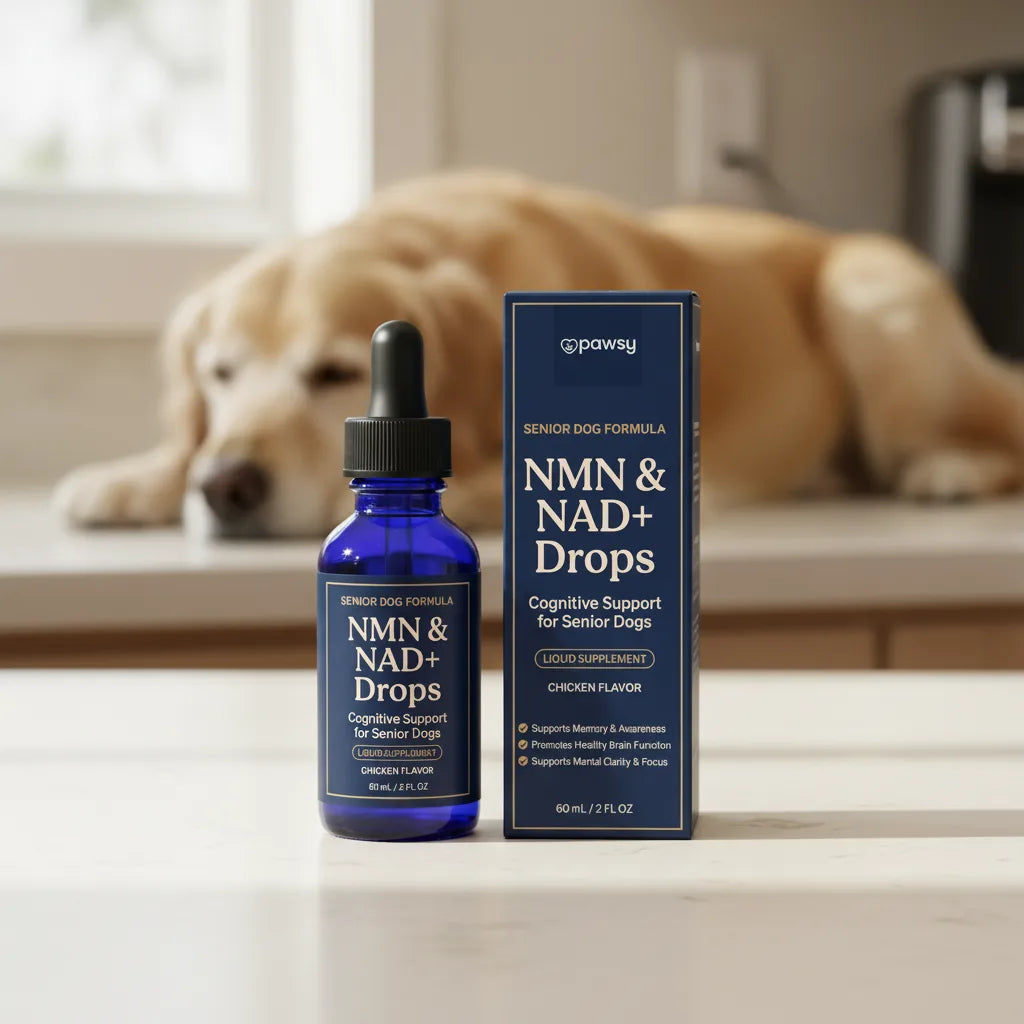
Why “They’re Just Old” Explains The Calendar — But Not The Change
Every cell has work to do. Muscle cells contract. Brain cells send signals. Skin renews. The immune system responds. That work depends on energy being made and moved where it is needed.
NAD+ is one of the molecules involved in that energy system. It also participates in normal cellular maintenance. Levels can decline with age across many species, which is why researchers study the NAD+ pathway so closely.
That does not mean every slow morning is an NAD+ problem. And it does not mean putting NAD+ on a label proves an outcome. Most of the detailed ageing research is still in people and laboratory models, not household dogs and cats.
What it does mean is that cellular energy belongs in the conversation. Especially when the product is honest enough to tell you exactly what is in the bottle.

The Senior Supplement Aisle Has A Transparency Problem
Turn over enough bottles and the pattern gets familiar.
“Proprietary blend.” A long list of fashionable ingredients. No clear amount beside each one. A chew shaped like a treat, with more space devoted to flavor than formula.
That makes comparison almost impossible. You cannot judge a dose the label refuses to show.
Pawsy built Second Wind around a simpler rule: every active, with its milligram, on the label. No treasure hunt. No blend hiding the smallest ingredient behind the biggest name.

What Second Wind Actually Puts In One Daily 1 mL Serving
Not “a vitality matrix.” Not “a premium complex.” The actual amounts.
- NMN · 100 mgA precursor used by the body in the NAD+ pathway.
- Nicotinamide Riboside · 50 mgAnother NAD+ precursor, included as part of the same cellular energy pathway.
- Algal Omega-3 DHA · 120 mgA marine-free source of DHA for normal brain structure and function.
- Phosphatidylserine · 25 mgA phospholipid found in cell membranes, including brain cells.
- Citicoline · 50 mgA source of choline used in normal cell membrane and neurotransmitter pathways.
- Lion’s Mane Extract · 40 mgA mushroom extract included in the cognitive-support blend.
- Vitamin E · 10 mg + MCT Oil · 200 mgAntioxidant and carrier support in the liquid formula.
- Chicken-flavoured liquid
- 60 mL amber glass bottle
- Measured with the included dropper
- Every active printed in milligrams

A 90-Day Routine. Not A Three-Day Miracle.
The internet loves the instant turnaround story. Bodies are usually less theatrical.
Pawsy gives you 90 days because a daily routine needs time to become a fair test. The point is not to hunt for a miracle every morning. The point is to make the routine consistent and watch the same ordinary moments.
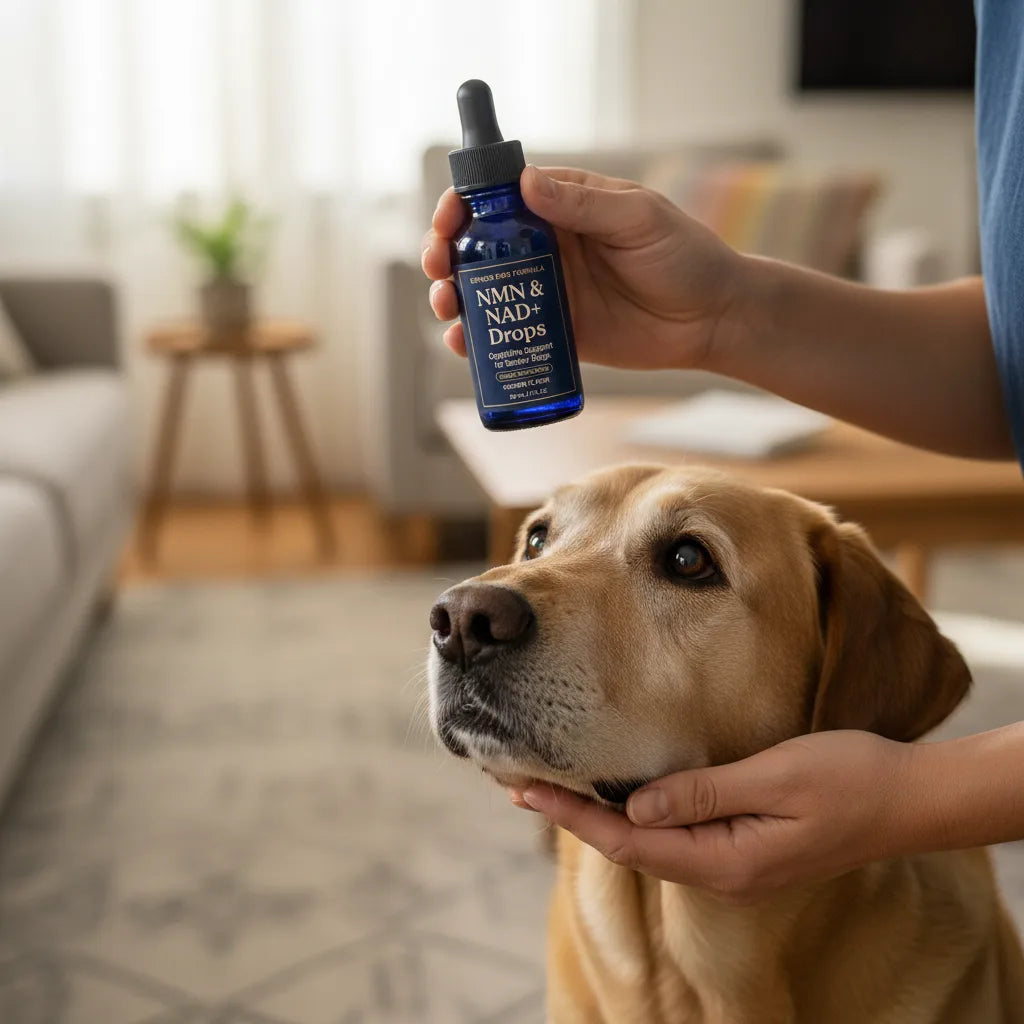
1Days 1–14 — Make It Boring
Pick one meal. Measure the dose. Put it on the food. Do the same thing tomorrow.
Do not change three other supplements at the same time. If you want to know what a routine is doing, keep the routine readable.
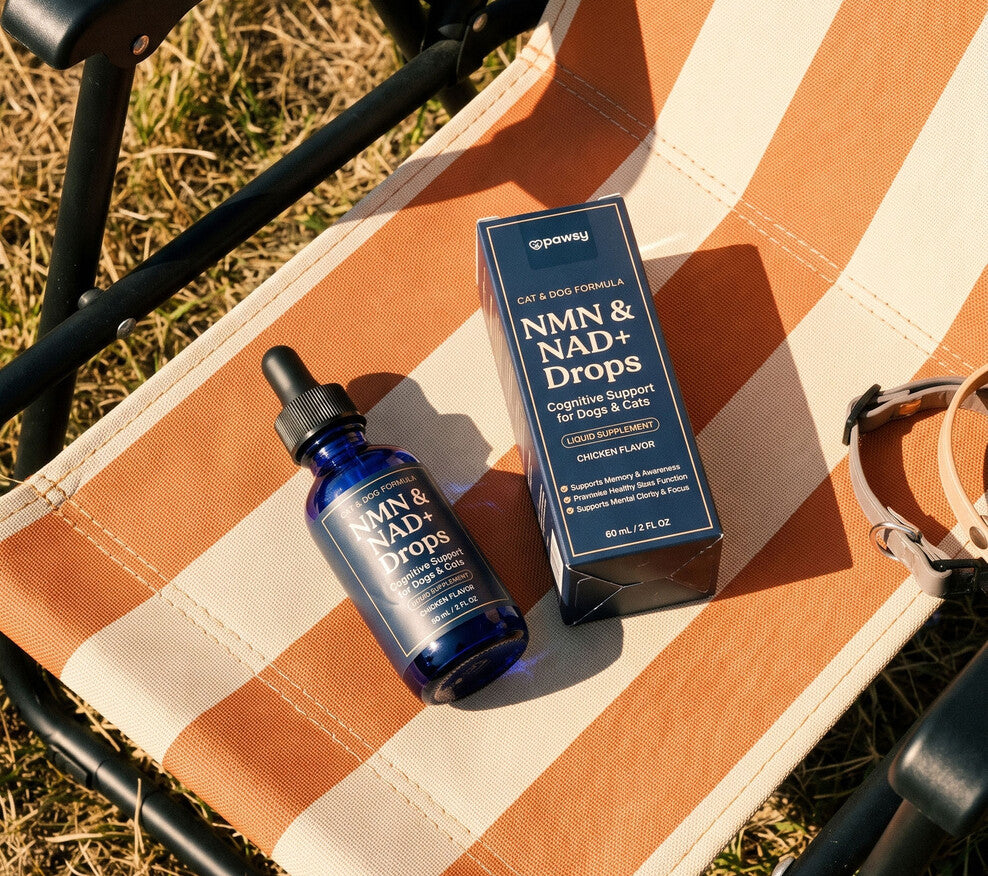
2Weeks 3–6 — Watch The Ordinary Things
Do not wait for a movie moment. Watch the rise after a nap. The turn at the end of the walk. The response to the leash. The speed of recognition when someone comes through the door.
Those are repeatable. That makes them more useful than a vague feeling that today seemed “better.”
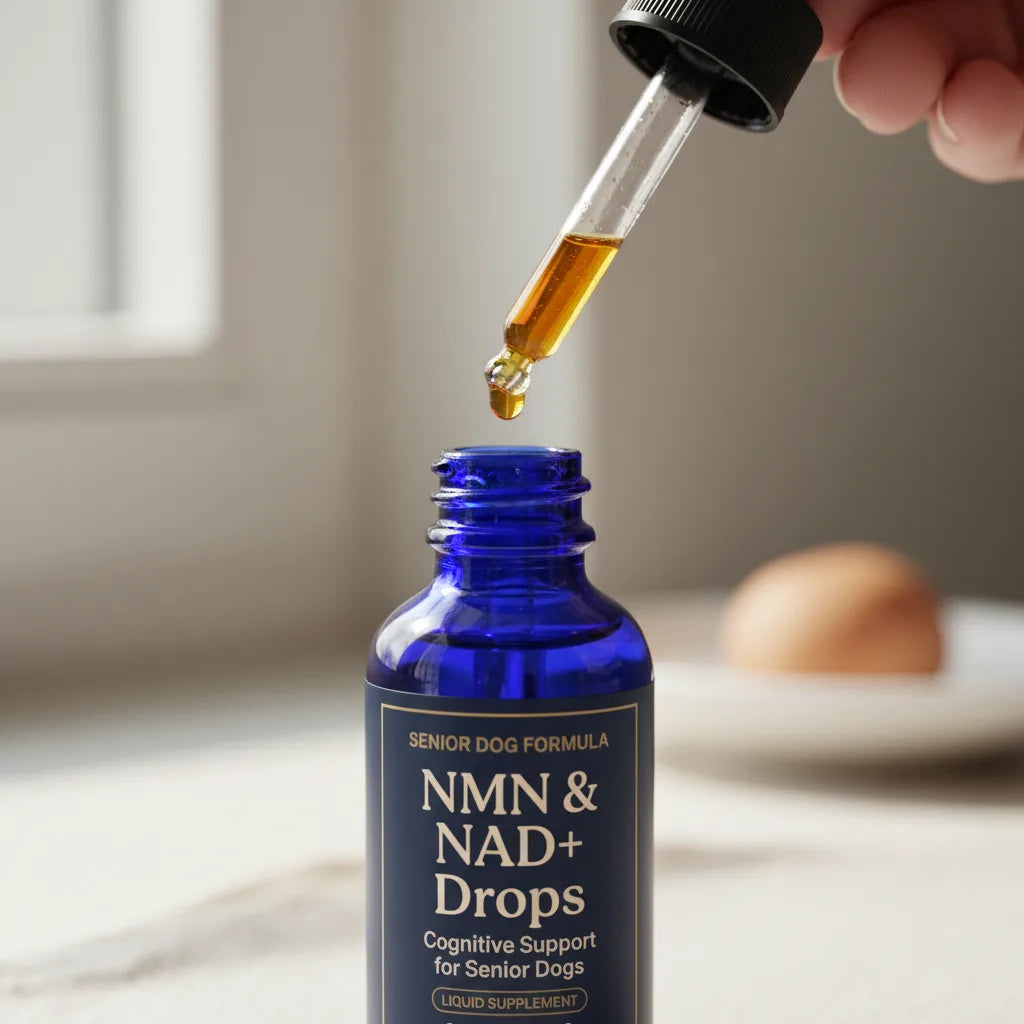
3Weeks 7–9 — Compare Notes, Not Memories
Look back at what you wrote before you started. Is the same hesitation still there? Is it happening less often, more often, or unchanged?
Individual results vary. “No meaningful change” is useful information too. It tells you to review the plan instead of endlessly moving the goalposts.

4Weeks 10–12 — Decide With The Whole Picture
At 90 days, look at consistency, diet, sleep, movement, veterinary guidance, and the notes you kept. A supplement is one part of that picture.
If Second Wind has not earned a place in the routine, Pawsy’s 90-day money-back guarantee is there. No dramatic story required.
The Three Notes Worth Keeping
How they rise, turn, climb, jump, and finish the usual walk.
How quickly they respond to voices, routines, visitors, and familiar cues.
Whether they seek out play, food, family time, and the parts of the day they used to enjoy.
Your dog does not owe you a transformation video.
The job is smaller and more honest: give them a consistent routine, notice what is actually changing, and involve your veterinarian when the pattern says it is time.
Second Wind — Daily Cellular Energy And Cognitive Support
- NMN, Nicotinamide Riboside, DHA, Citicoline and more
- All eight active amounts printed on the label
- Chicken-flavoured liquid for dogs and cats
- 90-day money-back guarantee
One bottle. One measured dropper routine. No proprietary blend to decode.
If your pet is pregnant, nursing, taking medication, facing surgery, or being treated for a diagnosed condition, speak with your veterinarian before use.
References & Reading
[1] Covarrubias AJ, Perrone R, Grozio A, Verdin E. NAD+ metabolism and its roles in cellular processes during ageing. Nature Reviews Molecular Cell Biology. 2021.
[2] Rajman L, Chwalek K, Sinclair DA. Therapeutic potential of NAD-boosting molecules: the in vivo evidence. Cell Metabolism. 2018.
[3] Gomes AP et al. Declining NAD+ induces a pseudohypoxic state disrupting nuclear-mitochondrial communication during aging. Cell. 2013.
These papers explain the biological pathway. They are not clinical proof that this product changes an individual dog’s health or lifespan.